News & Events
Insights

Destinations, Not Desks: Designing for a New Era of Work

March 5, 2026

The conversation around coming back to the office has shifted from whether employees should come back, to why they would want to.

For Alison McNeil, Partner at DIALOG, Design Futurist, Architect, and award-winning Interior Designer, this moment represents a broader transformation in the way people work – one rooted in designing meaningful destinations that give inhabitants a sense of purpose, culture, and adaptability.

In this conversation with Alison, we delve into what’s changing, what still matters, and how design can help organizations navigate uncertainty and retain the talent they need.


How has the role of the office changed in the last few years?

The pandemic accelerated something that was already happening by early adopters: going toward more flexible ways of working. The office is no longer the default place you go because you have to, but because it offers you something you can’t get elsewhere

It wasn’t a natural evolution, though. The pandemic forced this change to take place rapidly and unexpectedly, leaving employers with a sense of uncertainty. Now, years later, we are finally at the point where we have enough insight and real-world feedback to better understand what works. People can now define what they like because they have a choice – they can decide what is meaningful for them, and what will motivate them to come into the office.

And what is that?

It’s about purpose. What suits the different needs of an organization while also aligning to the end user’s own personal needs. People can be efficient and focused working from anywhere they want – if their job allows for it – but what draws them into the office is learning, connection, and a shared experience.

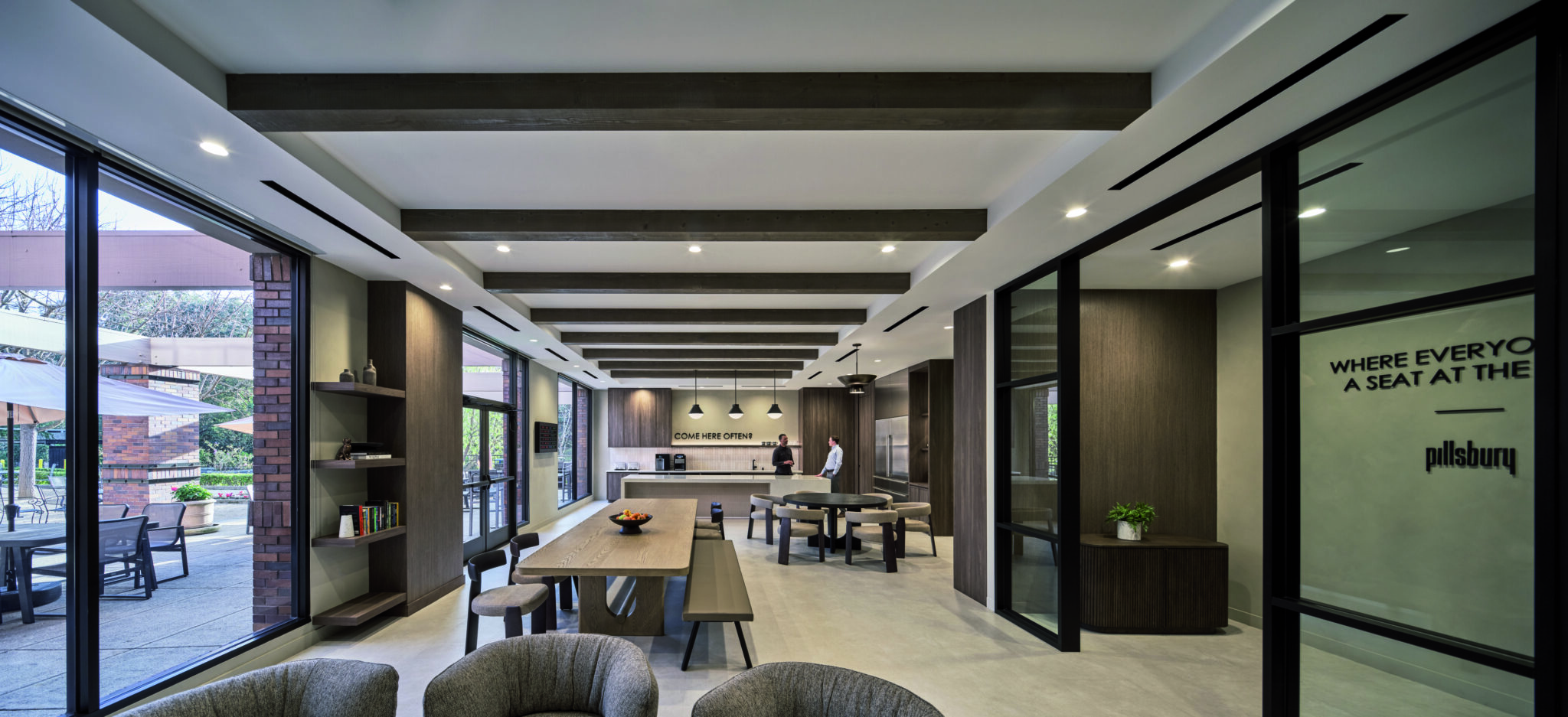
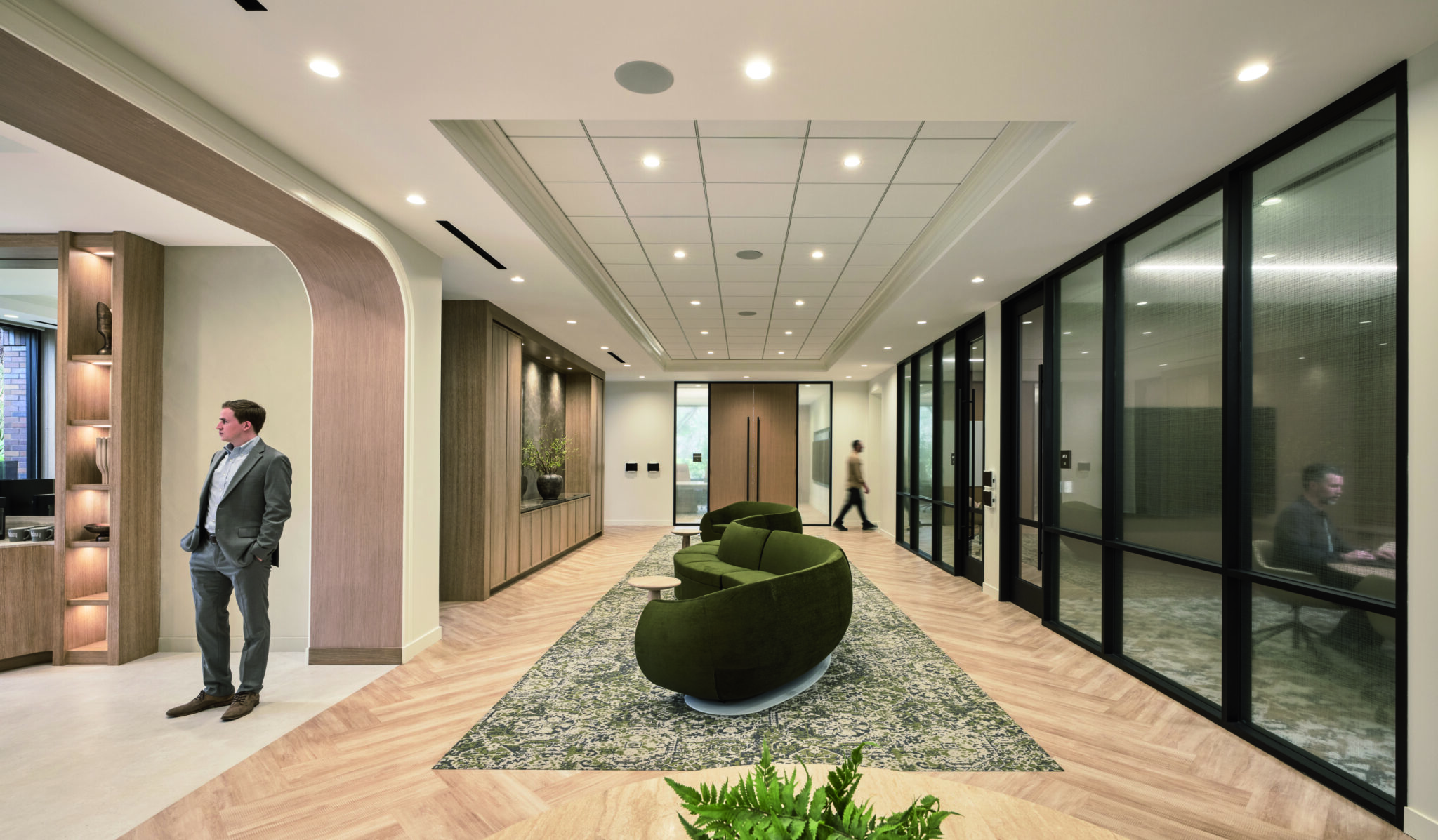
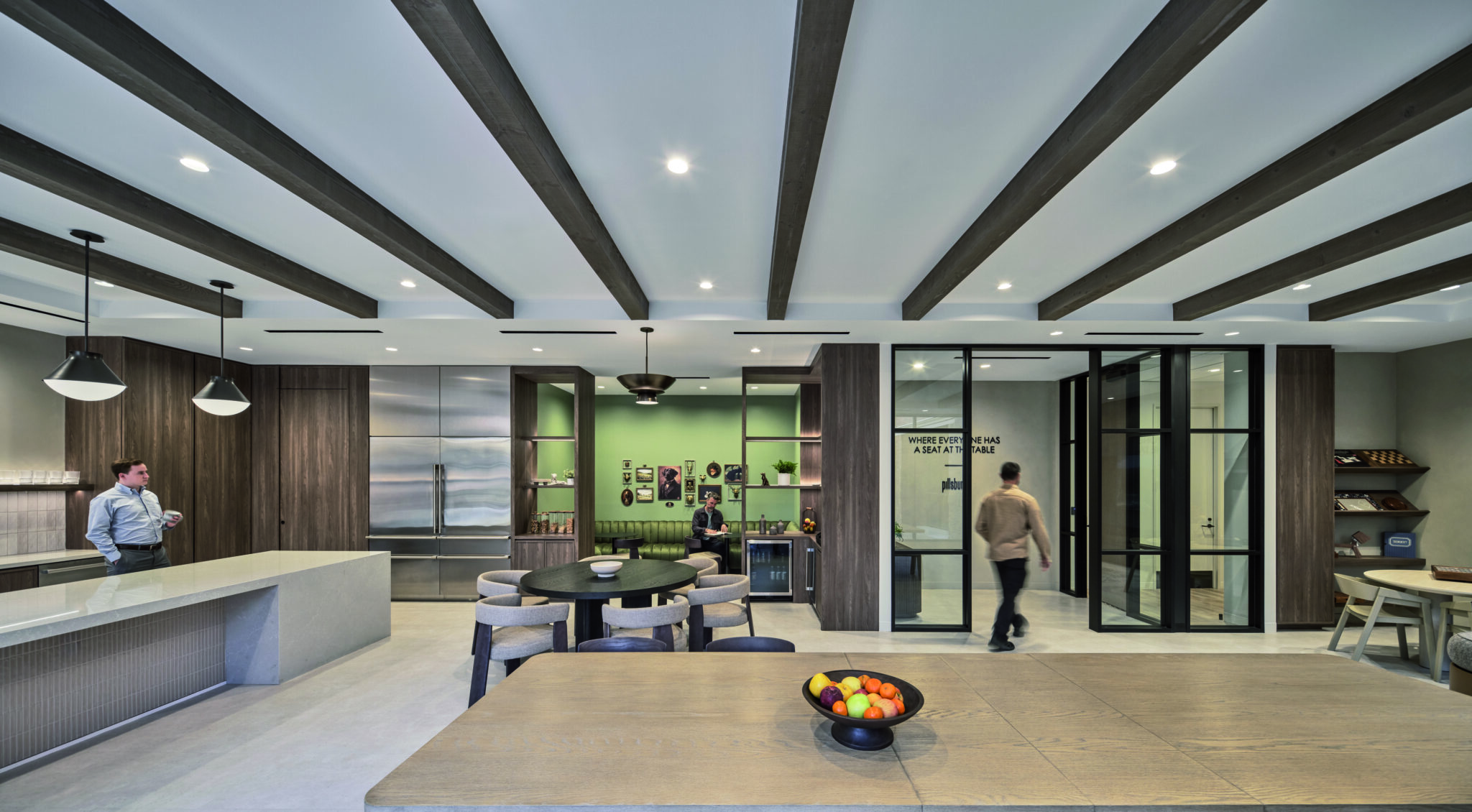
Pillsbury Winthrop Shaw Pittman Silicon Valley office.

You often talk about “destinations, not desks.” What does that mean in practice?

It means moving away from measuring success by occupancy or square footage per person and instead asking, what experiences do we want to enable? Great offices are designed around moments: team collaboration, mentorship, innovation, and social connection. When people come in, the space should feel purposeful, energizing, and aligned with their organization’s values.

As an example, our design of the new Pillsbury Winthrop Shaw Pittman office in Silicon Valley is an intentional departure from the traditional law firm. We transformed an isolated corporate headquarters feel into open, community-oriented hubs, shifting from the mentality of exclusivity and rigid structures to a “town” model focusing on collaboration and transparency.

What are you seeing as the biggest mistake companies make when rethinking their offices?

If we’ve learned anything from what transpired in the last few years, it’s that you can’t rush to solutions without understanding what your people want and need. There is no answer that fits all solutions. Every organization has a unique culture and rhythm, and the place where you choose to work should align with those things.

We need to listen, ask questions, observe how the teams collaborate, and then figure out pain points to address and how to design a space that works with your business strategy and growth plans. Even if you’re tired of asking for feedback, it is necessary to do those surveys and do that engagement to gain a greater understanding of how diverse people want to work. You need to be as accommodating as you can while still meaningfully accomplishing your business needs. People are much more complex: we need to stop categorizing and putting them into one box. For example, some people work differently in the morning than they do in the evening. It’s not black and white, it’s not either-or.

How should organizations approach flexible work structures from a design perspective?

“Flexwork” isn’t just a scheduling issue, it’s a design challenge. As designers, we need to create spaces that work seamlessly, whether a team is fully in-person, partially remote, or fully distributed. While patterns show Tuesdays, Wednesdays, and Thursdays as the most office-busy days, we need to create workplaces that accommodate both the busiest and quietest times.

That means investing in adaptable layouts, smart technology integration, and spaces that support flexibility between both in-office and remote participants. Good design makes collaboration feel natural, regardless of where people are. There is a big difference between “flexwork” and “hybrid work”: one talks about two people coming together to gain an understanding and build consensus, and the latter talks about two different lines that don’t cross each other – and that is a mistake.

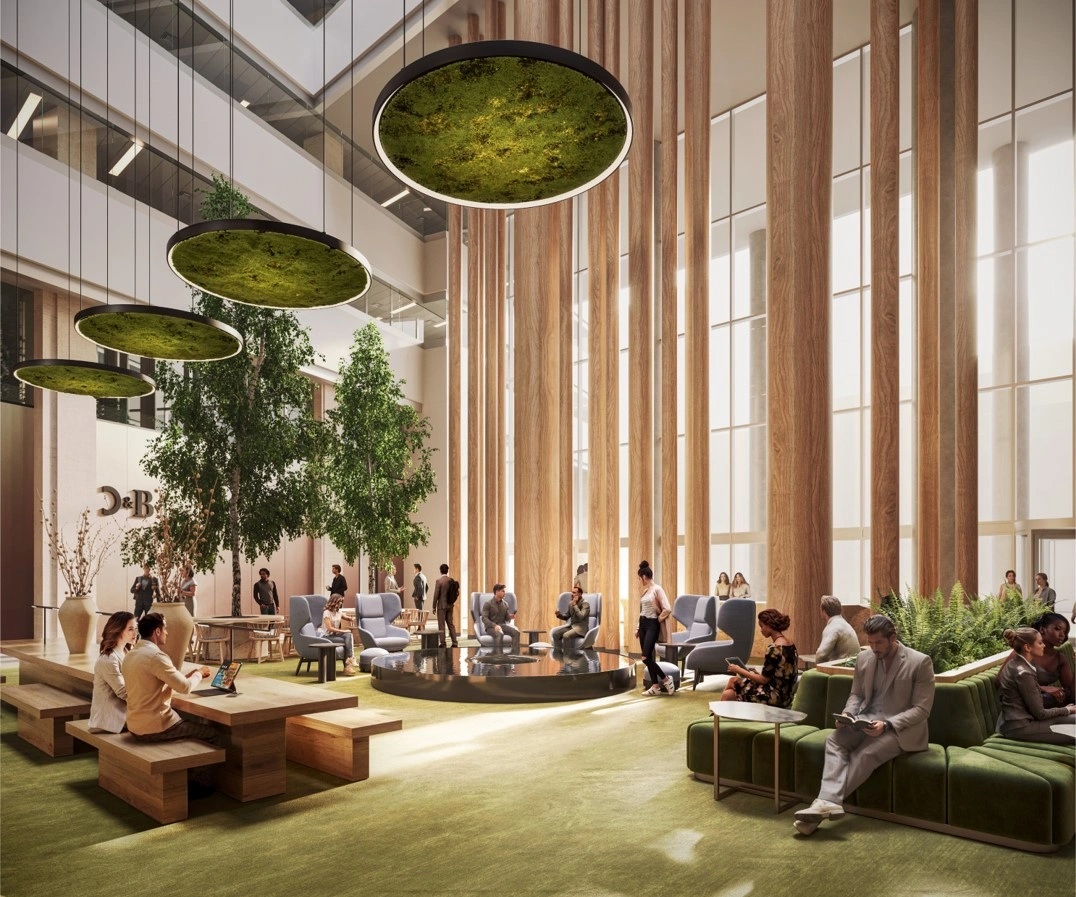
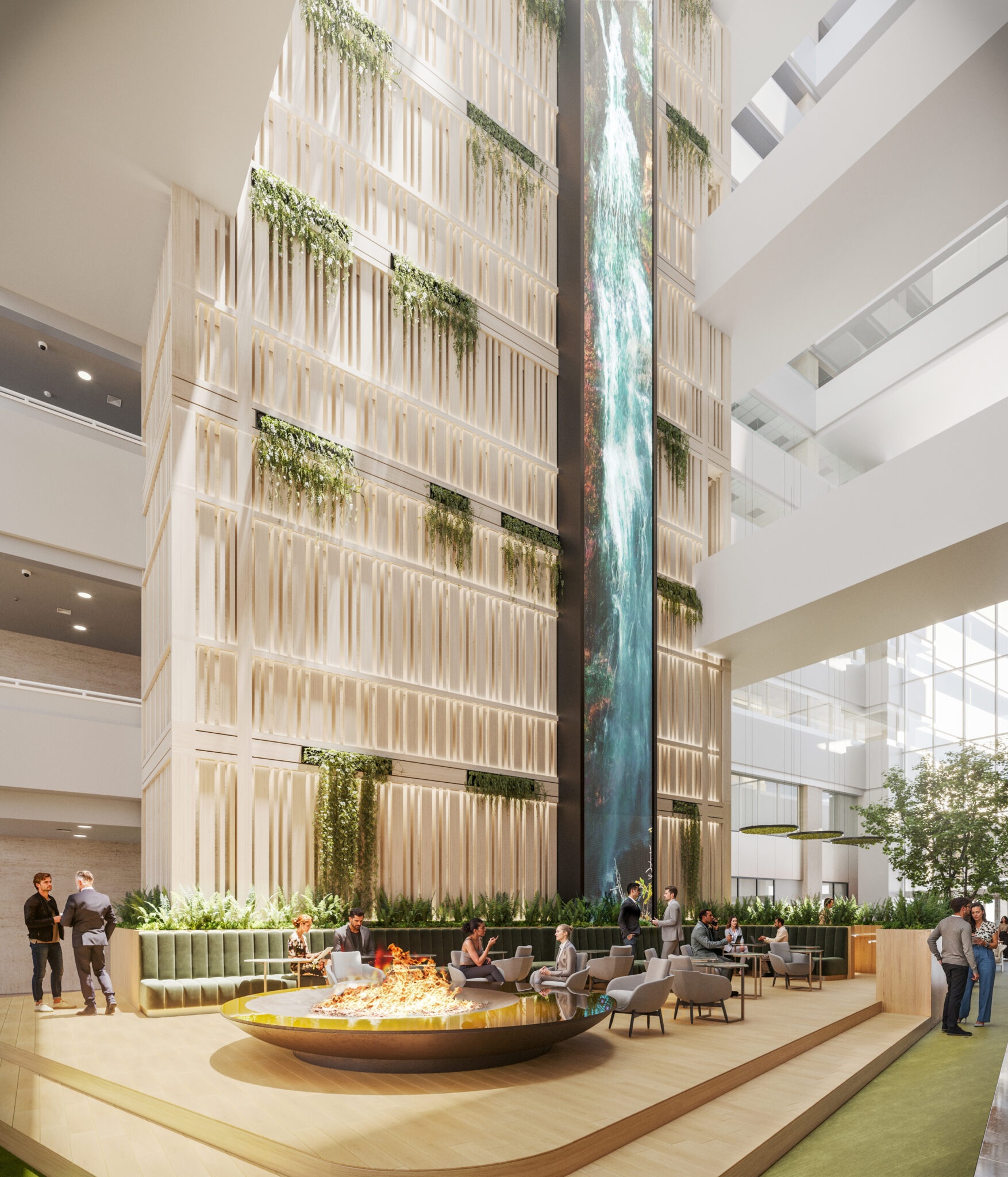
Berczy Square’s lobby, at the intersection of Toronto’s Financial District and the St. Lawrence Market, will soon cater to modern work preferences with versatile workspaces and biophilic design balancing the need for both productivity and relaxation, ensuring we designed the space for flexwork 18 hours a day.

Berczy Square atrium at 33 Yonge St. Toronto.

What role does the office play in attracting and retaining talent today?

People are looking for alignment with their values and a sense of belonging. The spaces you surround yourself in tell a deeper story about the work culture and environment. When an office thoughtfully addresses wellbeing, inclusion, and connection, it draws people in and makes them feel like they belong and want to stay.

Looking ahead, what excites you most about the future of workplace design?

As I dive deeper into the individual purposes of each organization, I get really excited about creating bespoke design around their purpose, tailored directly to that organization.

Pillsbury photography by Matthew Anderson.

Berczy Square renderings by Norm Li.