At DIALOG, solving global challenges with great design is our core purpose. Sustainable thinking is fundamental to our culture and an integral part of the design process for the projects we undertake.
This Earth Day, we’re proud to share that DIALOG has been recognized as one of Canada’s Greenest Employers for 2026 – the second year in a row that we’ve achieved this designation.
Each year, Canada’s Top 100 Employers recognizes organizations who foster a culture of sustainable thinking, climate action, and innovation in environmental leadership. Recipients of this designation demonstrate a widely recognized commitment to these principles, measured by the success of their environmental initiatives, reductions to their own carbon footprint, and employee contributions to sustainable thinking and action.
Among the many green initiatives we undertake as part of our Sustainability Action Plan, we’re proud to continually advance the use of sustainable materials in our practice, such as Ultra-High-Performance Concrete, bio-based materials, and low carbon steel. For more details about our designation, read the announcement here.
Aligned with this year’s Earth Day theme, “Our Power, Our Planet”, we’re showcasing five projects that demonstrate our multidisciplinary expertise in designing for climate action across various practice areas.
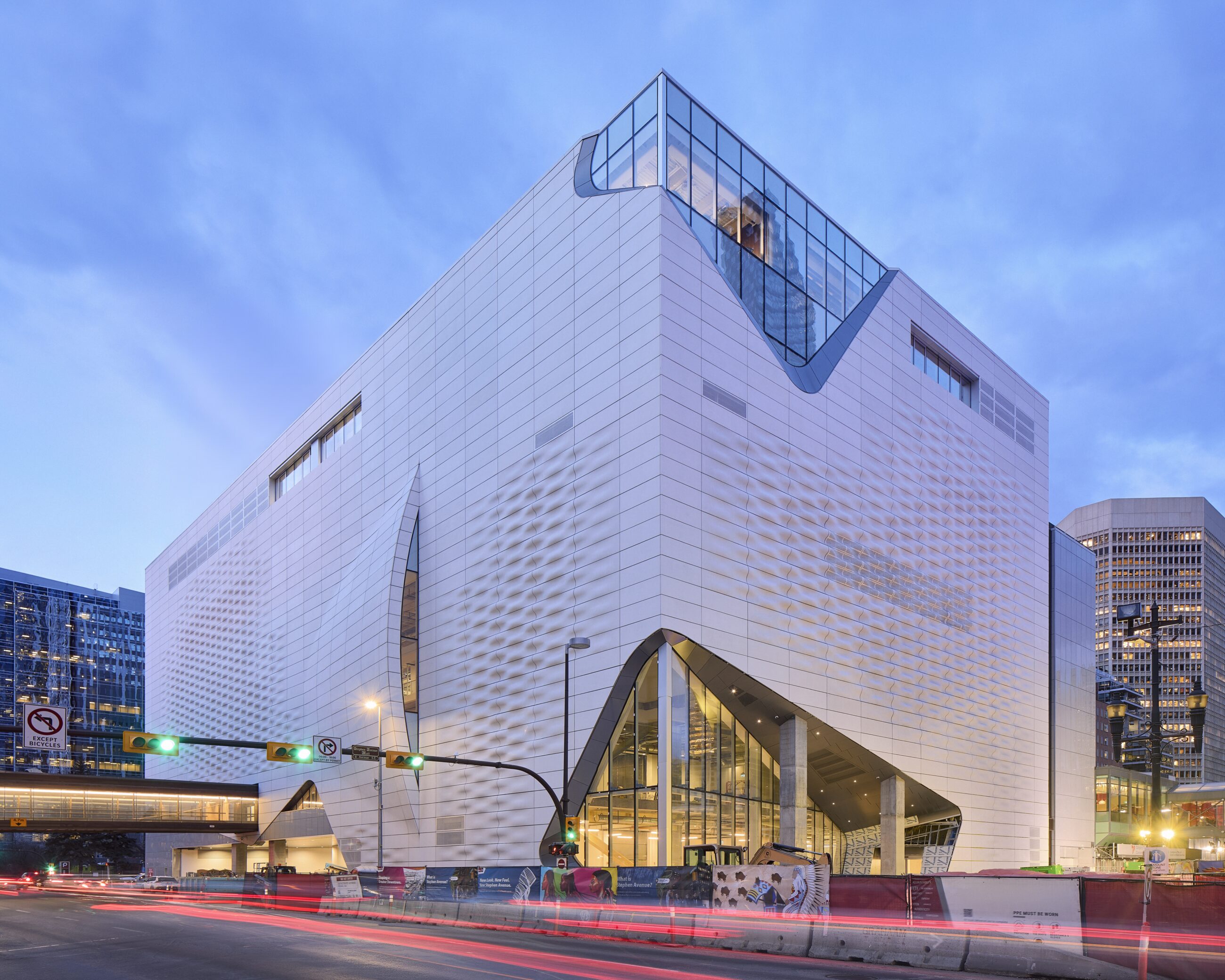
In downtown Calgary, new architecture at the Glenbow Museum (now the JR Shaw Centre for Arts & Culture) integrates the space into the city’s urban fabric, fostering a deeper connection between the museum and its community. An adaptive reuse project, the transformation preserves 38,000 tonnes of concrete from landfill and avoids generating 56,000 tonnes of new carbon.
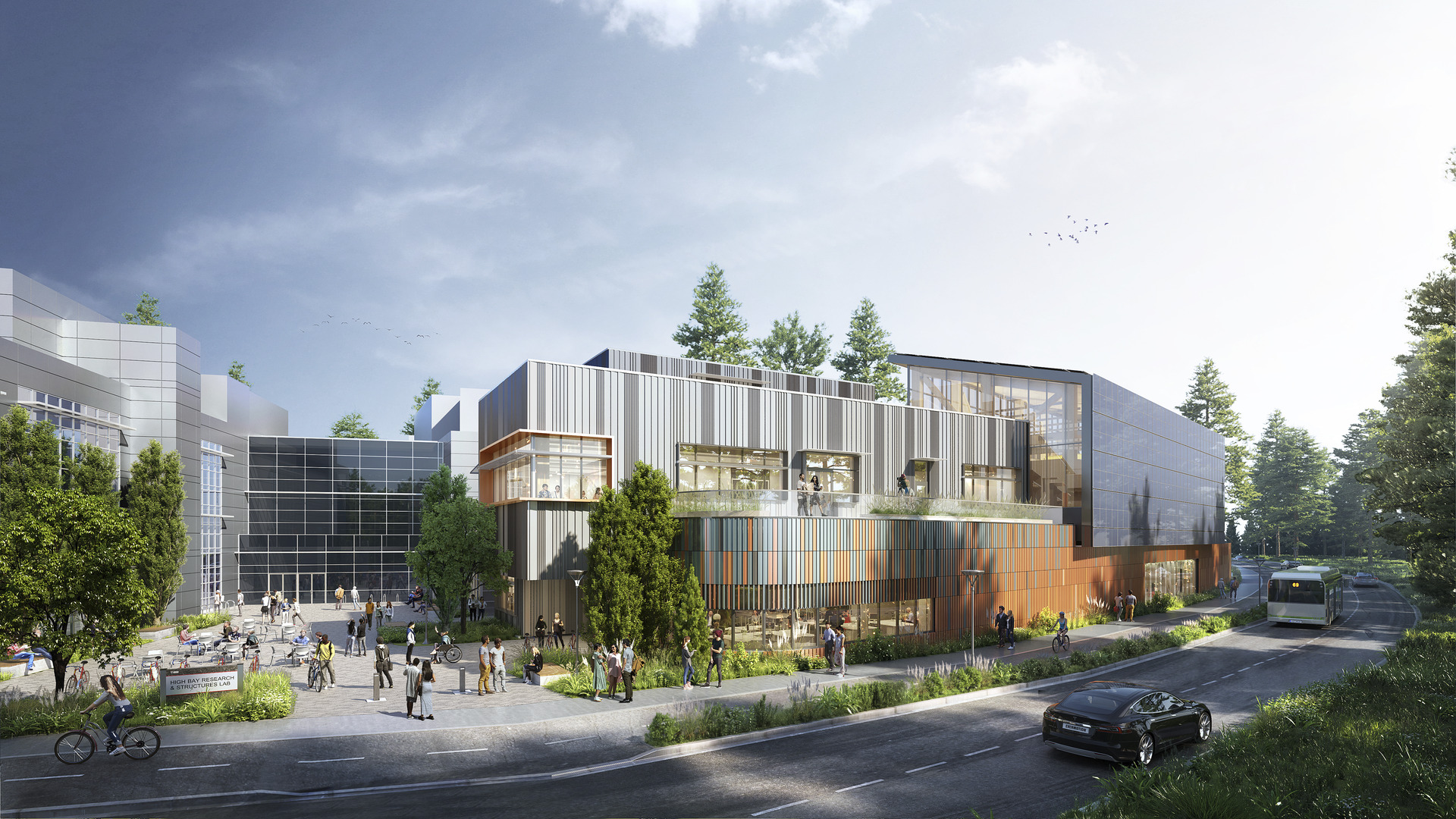
Slated for completion this Fall, the University of Victoria engaged DIALOG to design a new home on campus for its Engineering faculty. The project – a six-storey expansion to the existing Engineering & Computer Sciences (ECSE) building and a new High Bay Research & Structures Lab (HBRSL) – bridges the gap between climate science modelling and reality, transforming the learning experience for future engineers and computer scientists. Both buildings were developed through close collaboration with faculty, ensuring the architecture directly supports and reflects their research priorities.
Thousands of sensors and data loggers embedded throughout the building will capture live-time, real-world data on building performance under the climate conditions of the campus. These tools will inform breakthroughs in safe, sustainable infrastructure for the greater Victoria area and nearby coastal communities. On-site green roofs, bioswales, and Indigenous planting systems further integrate landscape, biodiversity, and water management into the learning environment.
The project has already achieved Zero Carbon Building accreditation and is targeting LEED® Gold certification, in alignment with the Canada Green Building Council’s Zero Carbon Building Standards and the International Living Future Institute’s Zero Carbon framework.
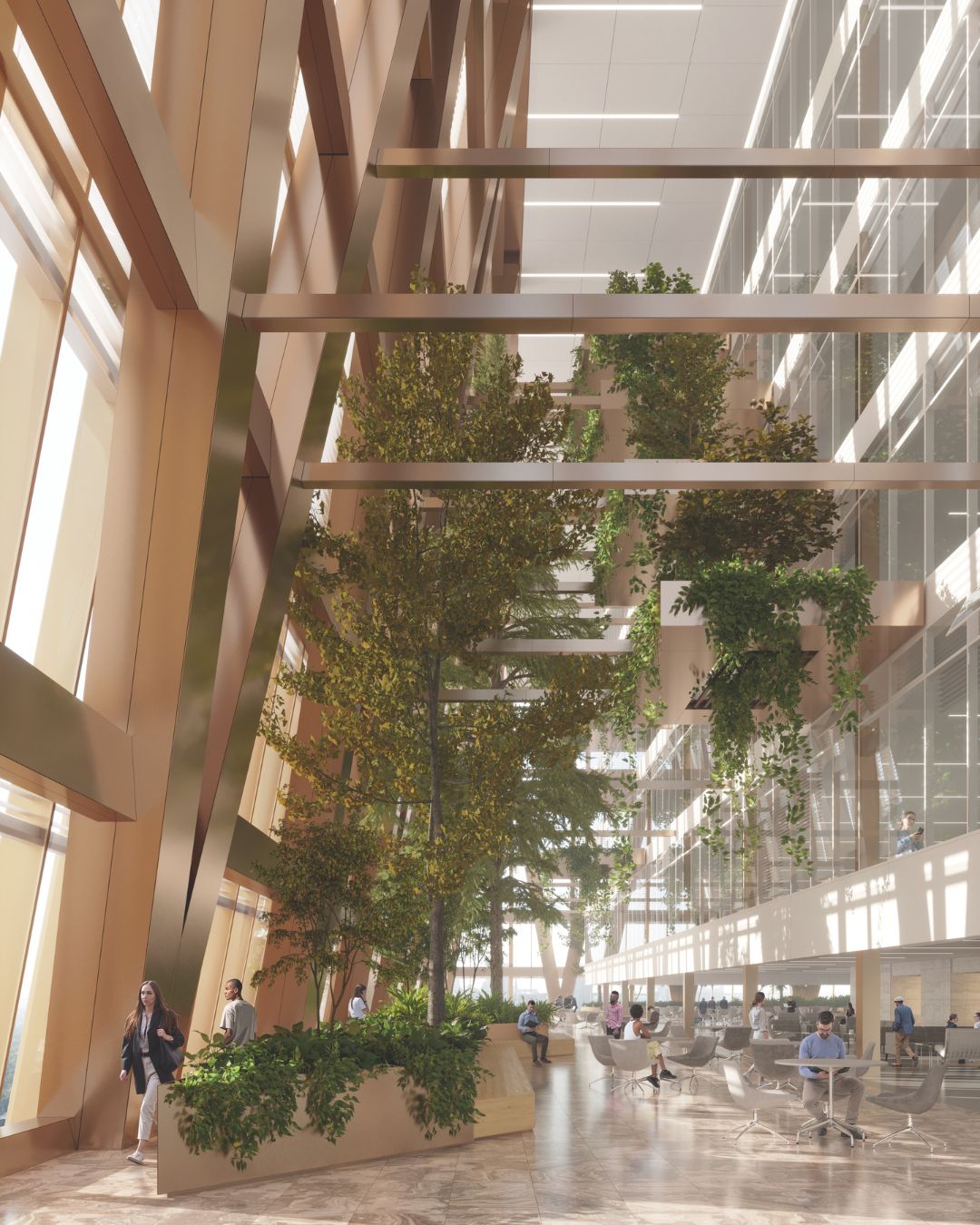
The Hybrid Timber Floor System (HTFS), conceived in partnership with EllisDon, is a patented construction technology that integrates sustainably harvested timber with steel and concrete in prefabricated floors. The system significantly reduces the overall carbon footprint of construction projects and enables fast on-site assembly. When the patent is approved and the flooring system is incorporated with other sustainable building technologies, towers as tall as 105 storeys could achieve carbon neutrality.
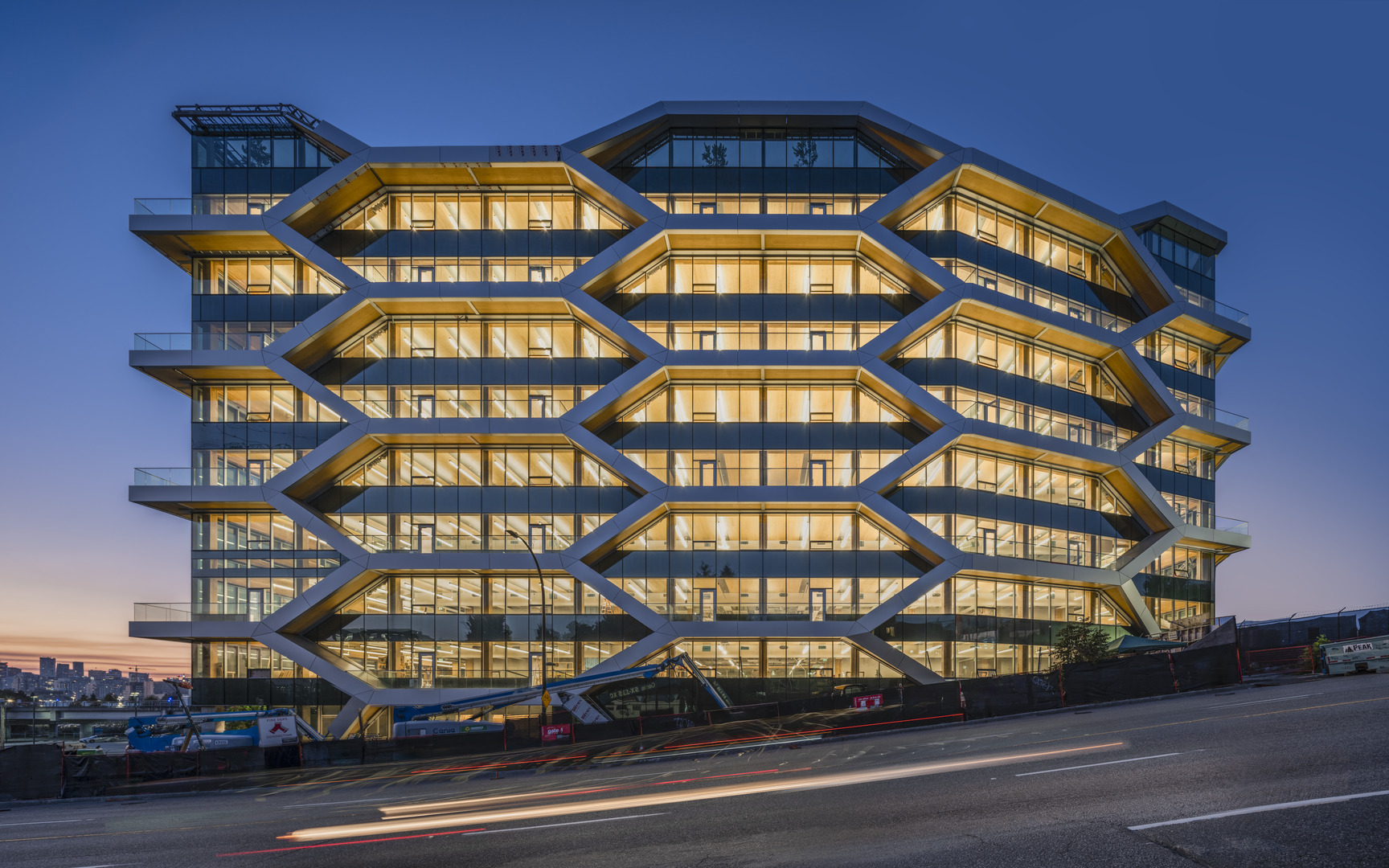
The Hive, a 10-storey mass timber office building in Vancouver’s False Creek Flats, embodies architectural, technological, and environmental innovation on many fronts. The wood used in this building was sourced locally from British Columbia’s sustainably managed forests, and regrows in just 42 minutes. Using structural mass timber instead of concrete avoided 1,542 tonnes of CO₂ emissions. That’s like taking 516 cars off the road for a year. The wood also stores 4,403 tonnes of carbon. That’s another 1,338 cars.
The all-electric building is designed for high performance, with projected greenhouse gas emissions and energy consumption levels 80% below the median for this building type. Key features include high-performance windows, high-efficiency heat recovery ventilation, and air source heat pump systems for heating and cooling. Furthermore, the design incorporates photovoltaic readiness for future solar power integration.
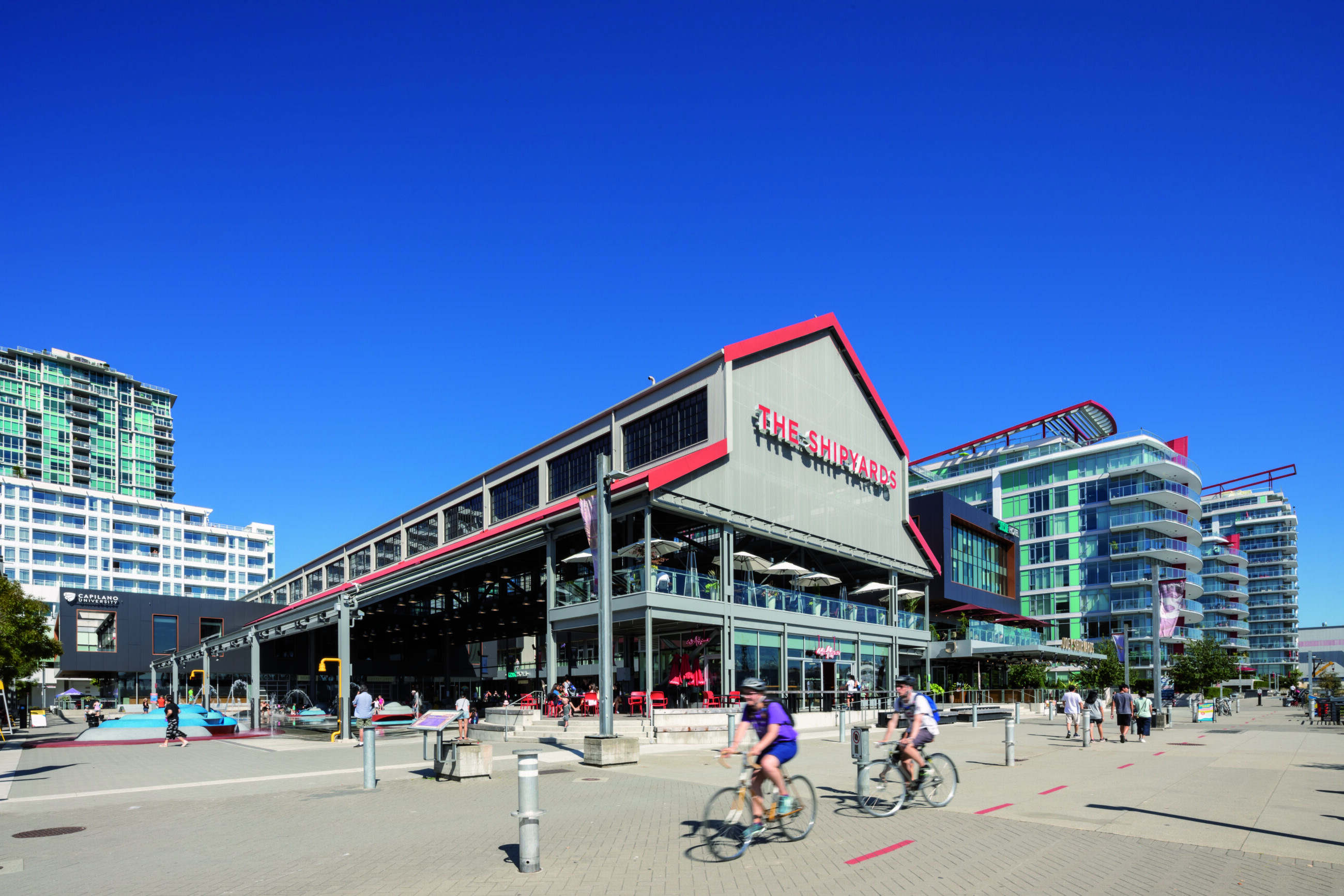
Civic & Culture, Sports & Recreation: The Shipyards
The Shipyards project demonstrates how adaptive reuse can drive sustainability by giving existing structures new life rather than replacing them. At its core is the transformation of the historic Machine Shop building, where original steel components and geometry are preserved and reinterpreted to support new, flexible uses. This approach minimizes material waste while maintaining the site’s heritage character.
Read press release: “Sustainable values in practice: Canada’s Greenest Employers (2026) announced”